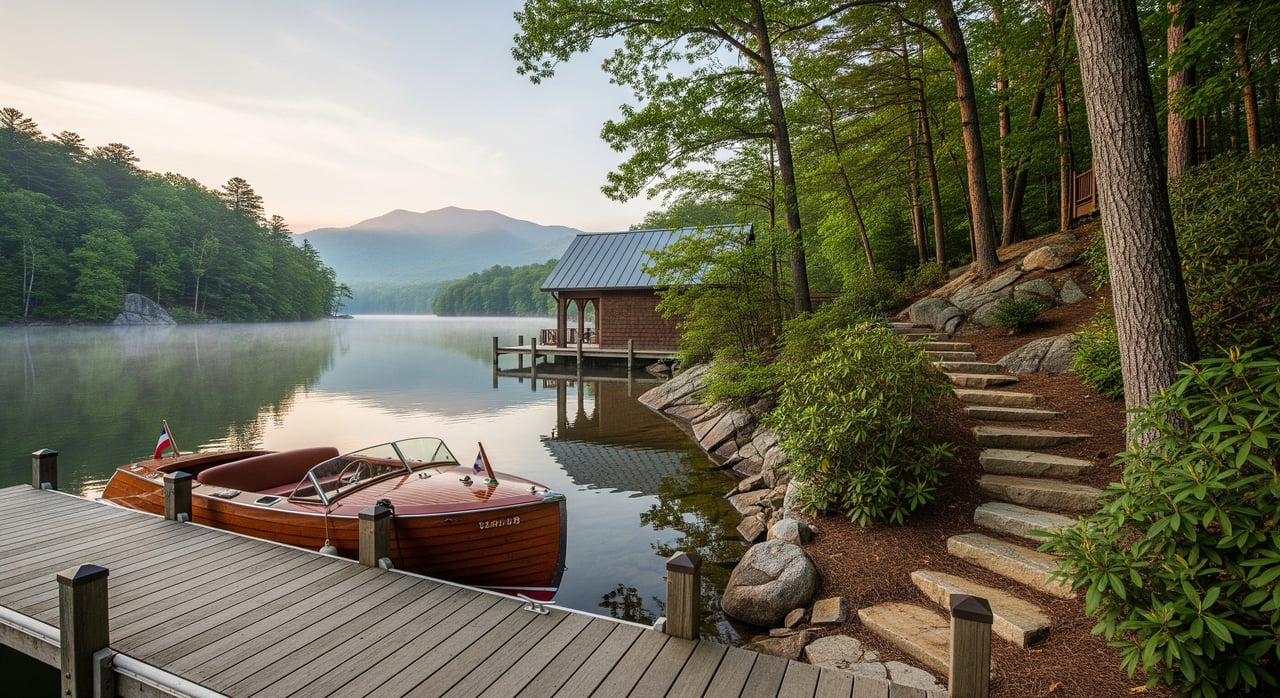
Dreaming of a mountain place where your boat sits just steps from the porch? In the Highlands and Lake Toxaway area, lakefront living is special, but the rules for docks and access are not one-size-fits-all. You want clear answers before you buy. This guide explains how docks, access rights, and approvals typically work around Lake Toxaway, what to verify in your due diligence, and how to avoid costly surprises. Let’s dive in.
Lake Toxaway basics: private vs public
Lake Toxaway and many nearby mountain lakes are often privately managed by a lake association or land company. That means public-lake rules may not apply. Your rights usually come from the deed and the association’s covenants and policies.
Confirm if the lake is private and how access works for your specific parcel. Some properties have direct shoreline with dock rights, while others rely on a shared or community dock. Always verify what is granted in writing.
What “lakefront” really means
“Lakefront” can describe different levels of access and use. In this area, lots can be steep and wooded with limited flat shoreline. Some parcels touch the water but do not have legal rights to add or use a dock.
You want to know whether the property has deeded riparian or littoral rights, a dedicated dock slip, or only a view. Review the deed, plat, and association documents to confirm the type of access and any limits.
Dock types and ownership
Common dock options include floating docks, fixed pile docks, and community or shared docks. Floating docks adapt to water-level changes and are often simpler to install. Fixed docks can be sturdy, but they may trigger stricter permitting where in-water structures are involved.
If a dock is shared, look for written maintenance responsibilities, use priorities, and liability language. The association may own or control dock locations, slips, or assignments. Do not assume ownership because a dock is present.
Legal access and rights
Riparian and littoral rights give waterfront owners certain uses of the adjoining water, but the scope depends on your deed and any covenants. Deeded rights are stronger than informal permission. Some plats reserve dock areas to the association.
If the property relies on an easement, confirm where you can walk or drive, where you can park, and whether the easement can be revoked. A revocable license or unrecorded agreement is a red flag.
Rules, permits, and approvals
Approvals vary by parcel and lake. Expect to involve several entities, starting with the lake association and the local county office where the property sits. Typical contacts include:
- Lake association or land company for covenants, dock rules, slip assignments, boat types, and transfer procedures.
- County planning and inspections for zoning, shoreline setbacks, dock permits, erosion control, and floodplain checks (Macon County or the county of jurisdiction).
- North Carolina Department of Environmental Quality for state permits related to shoreline stabilization and in-water impacts.
- U.S. Army Corps of Engineers for Clean Water Act permitting if wetland or jurisdictional waters may be affected.
- North Carolina Wildlife Resources Commission for boating registration and safety regulations.
- Local health department for septic permitting and required setbacks.
- Insurance carriers for coverage on docks, boats, and potential flood or dam-related risks.
Permits you may need include a dock construction permit, shoreline stabilization approvals, and potentially state or federal permits for any work below the ordinary waterline. If the lake is impounded by a dam, ask about seasonal drawdowns and operating practices that could affect dock use.
How to verify a dock
Before you rely on an existing structure, confirm that it is lawful and documented. Use this quick process:
- Ask the seller for copies of dock permits and approvals, including permit numbers and issuing agencies.
- Request the property file from the county permitting or inspections office.
- Confirm with the lake association that the dock appears on its records and that the assignment transfers with the property.
- Order a survey if needed to confirm property lines and whether the dock encroaches on a neighbor or easement.
Site and design factors
The right dock design depends on the shoreline and lake conditions. Focus on:
- Shoreline slope and substrate, such as bedrock or silt, which affects anchoring and stability.
- Water depth and exposure to wind or waves at the chosen location.
- Setbacks from neighboring docks and space for maneuvering.
- Vegetation buffers, erosion control, and septic system setbacks.
A contractor familiar with mountain-lake conditions can help you select materials and layouts that suit seasonal water levels and local rules.
Insurance and resale impacts
Standard homeowner policies may not fully cover docks or boat-related liability. Ask your insurance carrier about endorsements that cover dock damage and use. If a community dock is involved, confirm the association’s coverage and what you must carry.
From a resale standpoint, documented access and a permitted, well-maintained dock add value. Unclear or disputed rights often reduce marketability. Clear records make your future sale smoother.
Buyer due diligence checklist
Use this checklist to organize your review before you close:
- Deed, plat, and survey showing lot lines, shoreline, and any recorded easements.
- Title report listing covenants, restrictions, easements, and rights of way.
- Association covenants, bylaws, rules, amendments, and fee schedules, including any dock assignment or transfer policies.
- Copies of all permits for docks, shoreline work, septic, driveways, and any agency correspondence.
- Stamped survey showing the waterline description and improvements; confirm meander line usage if applicable.
- Maintenance agreements for any shared dock, ramp, or dredging obligations.
- Structural inspection of the dock for rot, anchoring, and compliance with permits on file.
- Septic inspection, pump-out, and verification of permitted setbacks from the shoreline.
- FEMA flood map check and any available lake level or dam operation notes.
Key questions to ask
Go in with clear questions so you get clear answers:
- Does the lot include deeded water access and specific dock rights? If not, what type of access is provided?
- Who owns the dock, and does the slip assignment transfer on sale?
- What restrictions exist on boat type, motor size, wake speeds, or hours of operation?
- What are the association fees and dock fees, and how are they billed?
- Are there planned water-level changes or dam operations that affect dock use?
- Are any enforcement actions, rule changes, or litigation pending related to docks or shorelines?
Next steps in the Highlands area
If you are serious about a lakefront home near Highlands and Lake Toxaway, start by gathering documents and confirming rights with the association. Coordinate early with county planning to understand local permits and setbacks. Line up inspections for the dock, shoreline, and septic system.
A local advisor can help you match your lake lifestyle goals with parcels that truly support them. The right property will have documented access, clear permits, and a shoreline setup that fits how you want to use the lake.
Ready to take the next step with a property-by-property plan and introductions to the right local contacts? Connect with Preston Mayfield for guidance tailored to your goals.
FAQs
Do all Lake Toxaway lots include dock rights?
- No. Dock rights depend on your deed, plat, and association rules. Verify in writing before you make an offer.
Who approves a new dock near Highlands?
- Start with the lake association and county planning. State or federal permits may be required depending on the design and in-water impacts.
Can I choose any dock design I want?
- Usually not. Associations and permitting agencies set standards for design, materials, setbacks, and environmental protection.
How do I confirm an existing dock is legal?
- Ask for permits, check county files, and confirm with the association. A survey and structural inspection help verify location and condition.
What should I know about water-level changes?
- Seasonal drawdowns or dam operations can affect dock access. Choose a dock design suited to typical water-level ranges and confirm seasonal practices with the association.
Are shared or community docks a good option?
- They can be, if maintenance, use priority, parking, and liability are clearly defined in recorded documents.
Will a documented dock help resale value?
- Yes. A permitted, well-maintained dock with clear, transferable rights typically improves marketability and buyer confidence.