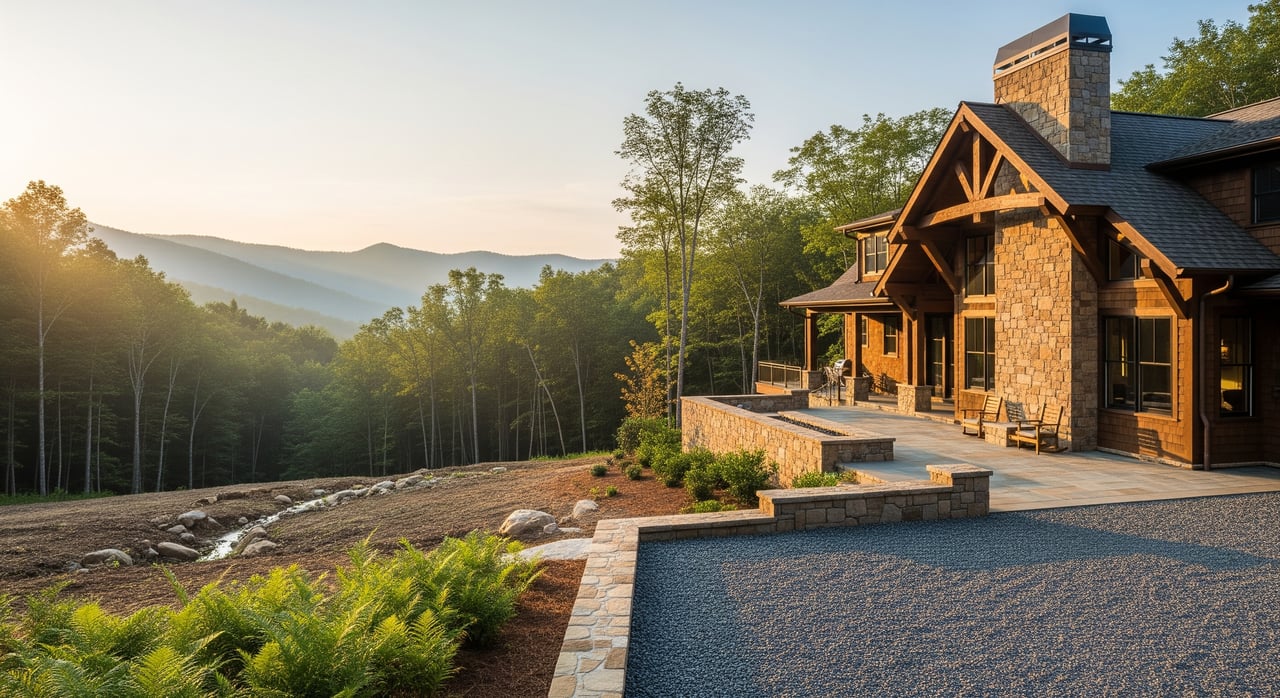
Thinking about calling Brevard home and torn between building new or buying an existing house? You are not alone. The mountains create unique opportunities and challenges, from scenic view lots to steep driveways and septic approvals. In this guide, you will learn how local terrain, utilities, permitting, costs, and timelines shape the right path for you. Let’s dive in.
Brevard realities to know
Brevard and greater Transylvania County attract outdoor lovers, second‑home buyers, and retirees. That demand can tighten inventory and make the best lots more competitive. Micro‑markets vary a lot here, so a valley lot and a ridgetop view parcel can trade very differently.
The land itself matters. Slopes, rock, drainage, and access often add cost and time. Many rural parcels rely on private septic and wells, which require testing and Health Department approvals. If you are inside Brevard town limits, water and sewer may be available, and town permitting rules apply. In the county, zoning, setbacks, road access, and possible floodplain or conservation constraints are key checks before you commit.
Build vs buy at a glance
Building: pros and cons
- Pros: full customization, orientation to views, and the chance to pick efficient systems and materials. You can design for accessibility or off‑grid features.
- Cons: longer timelines and cost uncertainty. On mountain sites, hidden expenses like rock removal, engineered foundations, retaining walls, long driveways, and power extension are common.
Buying: pros and cons
- Pros: faster move‑in and a known purchase price. You can inspect the house and scope updates with quotes.
- Cons: older systems may need attention. Roofing, HVAC, electrical, windows, insulation, or septic and well replacements can add up after closing.
Costs and how to compare
Building cost components
Estimate each of these early and include a contingency of 10 to 20 percent:
- Land price and closing costs.
- Site work: clearing, grading, erosion control, driveway, retaining structures, rock removal, and access improvements.
- Utilities: well drilling, septic design and install, electric service extension, or town water and sewer tap fees if available.
- Foundation: slab, crawlspace, walkout basement, or an engineered solution for steep or rocky sites.
- Construction: shell, finishes, and mechanical systems.
- Soft costs: design, engineering, permits, surveys, testing, and lender inspections.
- Landscaping and exterior features.
- Insurance, property taxes during construction, and interim interest on a construction loan.
Buying cost components
Budget beyond the purchase price for:
- Inspections and negotiated repairs.
- Updates or retrofits to meet current code or energy expectations.
- Maintenance on older systems, including septic and well service or replacement when due.
Financing options
- Construction‑to‑permanent loans fund the build in draws, often with interest‑only payments during construction, then convert to a mortgage at completion.
- Standard purchase mortgages work for existing homes with typical down payment and documentation.
- Renovation loans can combine purchase and upgrade costs into one loan.
- Local lenders who understand mountain properties, private roads, and septic or well financing can save time and stress. Start conversations early.
Time to move in
Building timeline
Expect several months to more than a year, depending on site complexity, weather, permitting, and builder schedules.
- Site selection and due diligence, including survey, title, covenants, floodplain checks, and neighborhood rules.
- Soil and perc testing, and geotechnical evaluation if slopes or rock are likely.
- Concept design and budget alignment with a builder.
- Secure construction financing or proof of funds.
- Permits: building, septic, erosion and sediment control if needed, and driveway access. Town approvals apply if the lot is inside Brevard limits.
- Site work and utilities: clearing, grading, access, well or water hookup, sewer or septic, and power.
- Construction from foundation to finishes, with required inspections.
- Final inspections and certificate of occupancy.
- Loan conversion to a permanent mortgage if applicable.
Buying timeline
Many purchases close in 30 to 60 days when financing and title are straightforward.
- Home search and showings, plus neighborhood and lot evaluation.
- Inspections: general home, septic, well and water, radon if you choose, and any specialty checks.
- Negotiate repairs or credits during contingencies.
- Close and move in.
Site and utilities checklist
If you plan to build
- Confirm septic feasibility with a perc test and Environmental Health evaluation.
- Check well potential or town water and sewer availability.
- Order a topographic survey and review access, slope, and driveway design.
- Estimate the cost to extend electric and internet to the homesite.
- Review covenants, HOA rules, setbacks, and any conservation restrictions.
- Get preliminary builder quotes and schedule expectations.
- Review FEMA flood maps and steep‑slope ordinances where relevant.
If you plan to buy
- Schedule a full home inspection, plus septic inspection and pumping records.
- Order a well inspection and water quality testing where applicable.
- Review utility bills and maintenance records for the past year if available.
- Verify road access and who maintains the road, especially on private roads.
- Confirm title, easements, and encroachments.
Location tradeoffs in Brevard
Buying in an established neighborhood can bring paved access, mature landscaping, and closer proximity to town services. Building on a private view lot can deliver privacy and orientation to sun and scenery, but it may require longer driveways, power extensions, and more complex foundations.
Consider winter access for steep roads, cell and internet options, and distance to emergency services. These factors affect insurance, permitting, and resale.
Resale and marketability
New construction can draw buyers who want modern systems and energy efficiency. Keep finishes neutral and floor plans adaptable to appeal to a wider future market. Well‑maintained existing homes in popular areas can also sell strongly, especially when they reflect local style and practical mountain features.
Real‑world scenarios
- Buyer A: You want a quick move‑in and a defined budget near downtown. Buying an existing home is likely the better fit.
- Buyer B: You want a custom, passive‑solar design oriented to a long‑range view, and you can handle a longer timeline. Building could be your best path.
- Buyer C: You found an inexpensive lot off a private road, but septic feasibility is uncertain. Do thorough due diligence, and be ready to pivot to an existing home if the lot proves costly to develop.
Local permits and who to call
Start early with the right offices and experts:
- Transylvania County Environmental Health for septic permits, well rules, and site evaluations.
- Transylvania County Planning and Building for zoning, setbacks, building permits, and driveway access.
- Town of Brevard Planning and Building if the property is within town limits and for water and sewer connections.
- County Tax Assessor and GIS for parcel maps, assessments, and tax details.
- FEMA flood maps and state environmental offices for floodplain and environmental checks.
Experts who can help:
- Local builder or general contractor with mountain‑site experience.
- Surveyor and civil engineer for topo and driveway design.
- Geotechnical engineer when slopes or rock are likely.
- Septic designer and installer, and a well driller.
- A lender who offers construction and renovation loan options.
- A home inspector familiar with mountain issues like drainage and foundations.
Quick decision checklist
Use this to compare options side by side:
- Budget: include a 10 to 20 percent contingency for new builds, and a realistic repair budget for older homes.
- Timeline: decide if you can wait many months to a year for a new build or prefer a 30 to 60 day close.
- Site: confirm septic, well or utility access, slope, driveway, and floodplain.
- Location: weigh town services and neighborhood access against privacy and views.
- Resale: aim for adaptable designs and neutral finishes if building; evaluate market fit for existing homes.
- Lender: match your financing to your path early to avoid delays.
Ready to choose your path?
Whether you want the ease of a move‑in‑ready home or the satisfaction of a custom build, the right local guidance makes all the difference. If you would like help comparing specific lots, recent comps, or builder quotes, reach out to Preston Mayfield to walk the options with you.
FAQs
How do costs compare between building and buying in Brevard?
- Costs depend on site conditions, finishes, and utility access. For building, include land, site work, utilities, soft costs, construction, and a 10 to 20 percent contingency. For buying, add inspection, repair, and upgrade budgets, and compare to recent local comps.
How long does new construction take in Transylvania County?
- Plan for several months to more than a year. Weather, permitting, builder schedules, and mountain‑site work such as rock removal or engineered foundations can extend timelines.
Are septic and well systems risky for rural homes?
- They can be if not vetted. Always get perc testing and Environmental Health approvals, verify well yield and water quality, and budget for systems that are more complex on steep or shallow soils.
What financing works for a build versus a buy?
- Construction‑to‑permanent loans fund new builds in stages and convert to a mortgage at completion. Existing homes typically use standard mortgages. Renovation loans can combine purchase and upgrade costs.
Will a highly custom home hurt resale?
- It can narrow your buyer pool. Designs with neutral finishes and flexible layouts tend to resell better, while very personalized features may limit demand.
What neighborhood factors should I evaluate in Brevard?
- Access to town services, condition and maintenance of private roads, distance to utilities, cell and internet options, proximity to outdoor amenities, and overall community character.
How do I check floodplain or steep‑slope concerns?
- Review FEMA flood maps, county floodplain determinations, and local ordinances. Pair those with a survey, topographic analysis, and, when needed, a geotechnical review.