You do not need a citywide bidding war to face real competition in Asheville. One home may sit for weeks while another draws fast attention and tough choices for both buyers and sellers. If you want to understand how a local agent helps you move smartly in that kind of market, this guide breaks down what matters most in Asheville and Buncombe County. Let’s dive in.
Asheville competition is selective
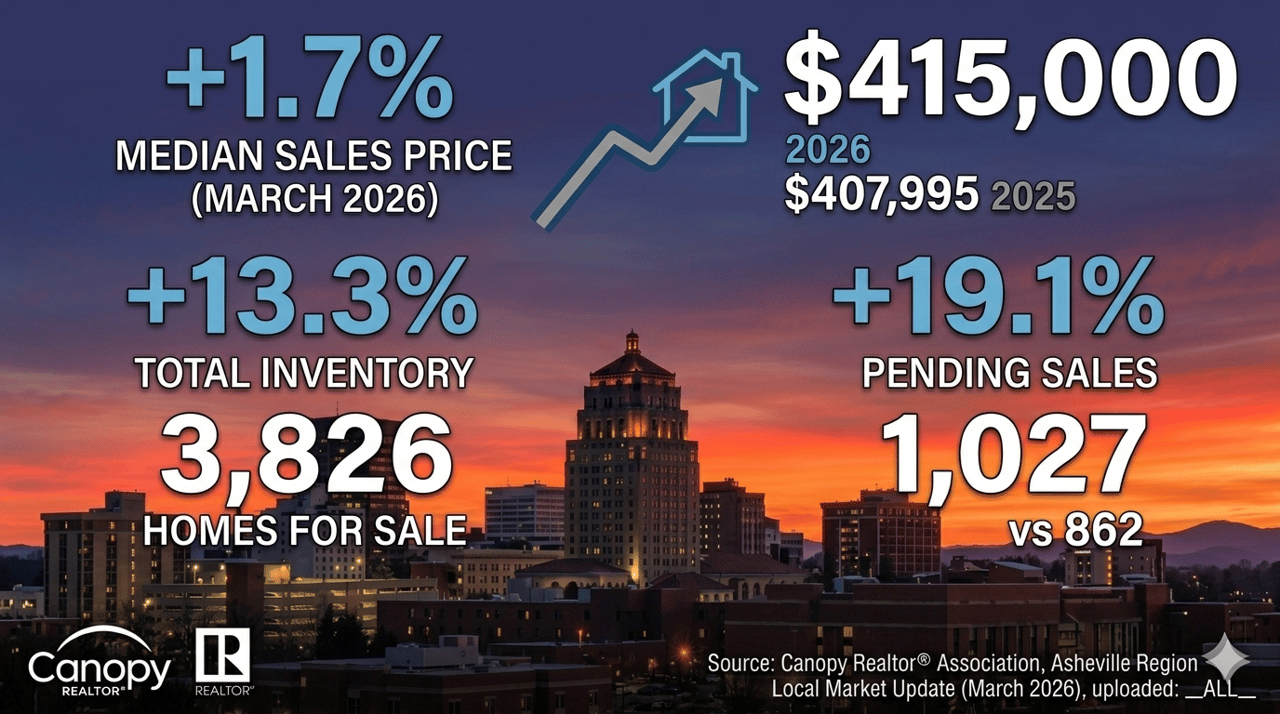
Asheville is not the same market it was during the peak frenzy years, but that does not mean multiple offers have disappeared. Recent market data suggests a more balanced backdrop, with Asheville homes receiving about one offer on average and selling in about 122 days, while inventory has also increased across the broader Asheville region.
That said, averages can hide what is really happening on the ground. Some listings still move quickly, especially when pricing, condition, and location line up well. Others may have more room for negotiation, which is why local context matters so much.
The broader Asheville region had about 4.5 months of supply in February 2026, and weekly reporting showed new listings, pending sales, and inventory all rising. That points to a market with more options than buyers saw a few years ago, but still enough activity for certain homes to attract multiple offers.
Asheville micro-markets change the strategy
A local Asheville agent does not treat the city as one uniform market. Pricing and inventory can vary sharply between areas like Downtown Asheville, Kenilworth, Oakley, and ZIP codes such as 28803, 28804, 28805, and 28806.
That matters because your offer strategy should fit the specific pocket of the market you are entering. A well-updated home in one neighborhood may need a fast, competitive approach, while a similar price point in another area may allow more flexibility on terms.
This is where local guidance becomes practical, not just theoretical. Instead of relying on broad headlines, you need someone who can help you read the listing in the context of that street, area, and current buyer demand.
What happens in a North Carolina multiple-offer situation
In North Carolina, all offers must be presented to the seller as soon as possible and no later than three days after receipt. That helps ensure sellers can review offers promptly, but it does not mean there is a first-in-door rule.
There is no first-in-door rule in North Carolina. A seller can accept one offer, reject all offers, or ask buyers for highest and best terms.
The existence of multiple offers is also not automatically something other buyers will be told. If a seller authorizes that information to be shared, it must be shared fairly, equally, and honestly.
A broker also cannot disclose the price or material terms of one offer to a competing party without express authority. In plain language, your offer usually has to stand on its own strength rather than rely on inside information about competing bids.
What “highest and best” means
When a seller asks for highest and best, they are asking buyers to submit their strongest overall offer. That does not always mean the highest price alone.
In Asheville, and across North Carolina, sellers are encouraged to weigh the whole package. That includes financing strength, timing, due diligence fee, earnest money, contingencies, possession terms, and whether the paperwork is complete and clear.
A strong local agent helps you decide where to push and where to stay disciplined. That balance matters, especially if you are relocating, buying a second home, or trying to compete without overextending yourself.
How a local Asheville agent strengthens your offer
A good local agent is not just forwarding paperwork. The real value is helping you shape an offer that makes sense for the home, the micro-market, and your risk tolerance.
Price is only one lever
Price matters, but sellers often compare more than the top number. They may favor an offer with stronger financing, clearer terms, or fewer moving parts over a slightly higher offer that feels uncertain.
That is why local agents compare the entire package. In a selective market like Asheville, the difference between winning and losing may come down to how easy your offer looks to execute.
Due diligence fee can carry real weight
In North Carolina, the due diligence fee is a negotiated payment made to the seller at contract execution. It gives you the right to terminate during the due diligence period, and if the sale closes, that amount is credited at closing.
If you terminate during due diligence, the seller usually keeps that fee. Because of that, a higher due diligence fee can signal seriousness and may carry as much practical weight as price in a competitive negotiation.
A local agent helps you think carefully about this number. The right amount depends on the listing price, the length of the due diligence period, local conditions, and your comfort with risk.
Earnest money serves a different purpose
Earnest money is separate from the due diligence fee. It is trust money, and under current North Carolina rules it generally must be deposited within three banking days, with earnest money tied to an accepted offer deposited no later than three days after acceptance if paid by means other than currency.
For buyers, the key point is simple: due diligence fee and earnest money are not the same tool. A local agent helps you understand how each one affects the appeal and structure of your offer.
Clean offers reduce friction
In everyday real estate language, a clean offer usually means fewer contingencies, clearer financing, and complete paperwork. It is not a legal term, but it is a useful way to describe an offer that gives the seller fewer reasons to worry.
In Asheville, buyers often include financing, appraisal, and inspection-related contingencies. A local agent can help you decide which terms are necessary for your situation and which ones may make your offer less competitive.
The goal is not to remove protections carelessly. The goal is to keep your offer straightforward, well-supported, and easy for the seller to evaluate.
Proof matters in competitive situations
A strong preapproval or solid proof of funds can help support your offer. Sellers want confidence that the contract can actually make it to closing.
A local agent helps make sure those documents are current, clear, and ready to go when timing matters. In a listing-specific competition, a complete package can keep you from losing momentum.
Why escalation clauses need caution
An escalation clause is language that raises your offer price under certain conditions if a competing offer comes in higher. Buyers often ask about these clauses when they feel pressure to compete.
In North Carolina, brokers are prohibited from drafting escalation clauses because that can cross into unauthorized practice of law. If you want that kind of custom language, attorney review is recommended.
That is one more reason local guidance matters. A careful Asheville agent can explain the option, help you understand the risks, and involve an attorney when needed rather than improvising with legal language.
Disclosure timing can affect the deal
North Carolina residential disclosure statements must be delivered no later than the time you make an offer. If required disclosures are not delivered on time, a buyer may have a statutory right to cancel the resulting contract within the allowed window.
That is not just a technical detail. In a multiple-offer setting, timing and completeness matter, and a local agent helps you track those obligations so there are fewer surprises after acceptance.
How local agents help sellers navigate multiple offers
If you are selling in Asheville, the job is not just to collect offers and pick the highest number. The goal is to choose the offer that best fits your priorities and has the strongest path to closing.
One buyer may offer more money but ask for concessions or present weaker financing. Another may offer a little less but bring a stronger due diligence fee, a cleaner contract, and a closing timeline that fits your plans better.
A local agent helps you compare those tradeoffs clearly. In North Carolina, sellers can choose one offer or ask all buyers for highest and best, and your agent should help you review each option fairly and strategically.
Confidentiality also matters on the listing side. Unless the seller authorizes certain disclosures, competing buyers should not be given the material terms of another party’s offer.
Why Asheville buyers benefit from local guidance
In a market like Asheville, broad national advice can miss the details that actually shape your results. Local inventory patterns, neighborhood-level pricing, and North Carolina contract practices all influence how you should respond.
That is especially true if you are moving from out of town or shopping for a second home in the mountains. You may be comparing homes across very different parts of Asheville and Buncombe County, and the right strategy in one pocket may be the wrong move in another.
A local agent helps you stay grounded. You can move quickly when the right home appears, stay realistic about risk, and avoid confusing speed with strategy.
The bottom line on multiple offers
Multiple offers in Asheville are real, but they are not universal. The market is more balanced than it was in the frenzy years, yet well-positioned homes can still attract serious competition.
That means your approach should be precise, not panicked. When you understand due diligence fee, earnest money, clean offers, highest and best, and the limits around escalation clauses, you can compete with more confidence and fewer surprises.
If you want a local read on how to structure an offer or evaluate multiple offers in Asheville, Preston Mayfield brings hands-on market knowledge, clear communication, and practical guidance built for Western North Carolina buyers and sellers.
FAQs
What does multiple offers mean in Asheville real estate?
- It means a seller has received more than one offer on a property, but in Asheville this tends to be listing-specific rather than a citywide constant.
What is a due diligence fee in North Carolina home buying?
- It is a negotiated payment made to the seller at contract execution for the buyer’s right to terminate during the due diligence period, and it is usually retained by the seller if the buyer terminates.
What is earnest money in a North Carolina offer?
- It is separate trust money that supports the contract and follows deposit timing rules that differ from the due diligence fee.
What does highest and best mean for Asheville buyers?
- It means the seller is asking you to submit your strongest overall offer, including price and terms, rather than assuming the first or highest number automatically wins.
Can an Asheville agent tell me what another buyer offered?
- Not unless there is express authority to share that information, because brokers cannot disclose the price or other material terms of one offer to a competing party without permission.
Can a North Carolina agent write an escalation clause?
- No, North Carolina brokers are prohibited from drafting escalation clauses, so buyers who want that type of custom language should involve an attorney.
Why do Asheville micro-markets matter in a multiple-offer strategy?
- Pricing, inventory, and competition can vary a lot by neighborhood and ZIP code, so offer strategy should be tailored to the specific area and property, not just citywide averages.